
Trending
Can NFTs Transform Anime Collaboration?
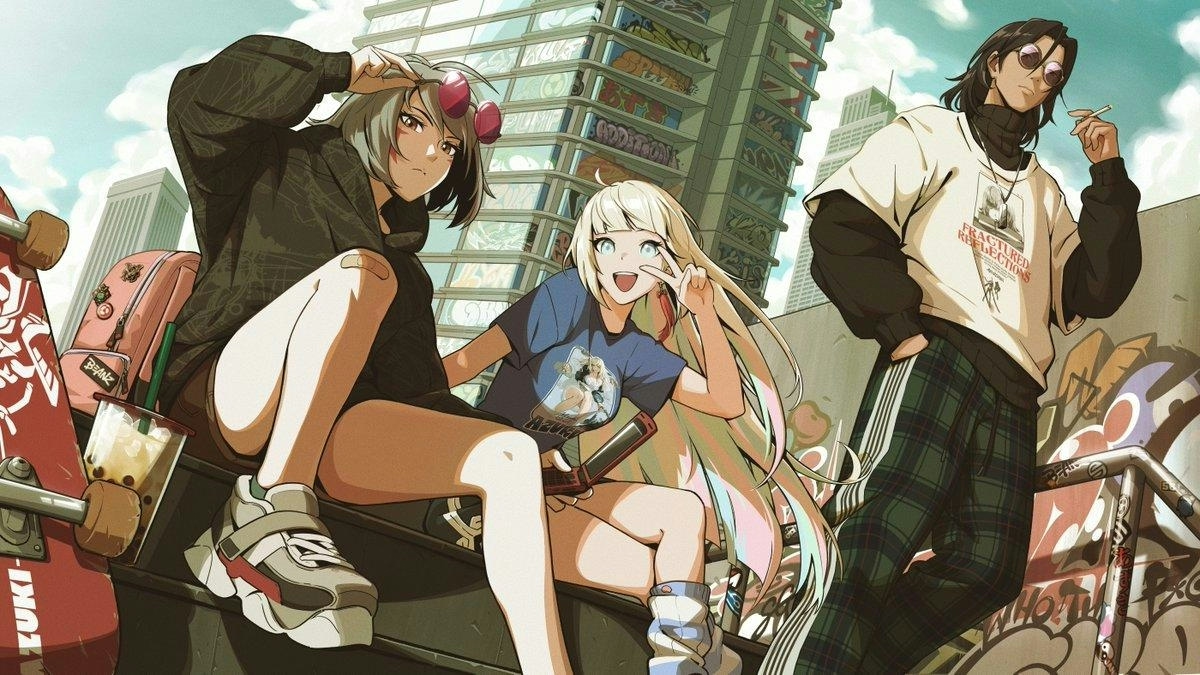
Can NFTs Transform Anime Collaboration?
Bridging Traditional Anime and Digital Innovation
The second day of Anime Expo featured a compelling panel that brought together the worlds of classic anime storytelling and emerging digital technologies. Acclaimed creator Goro Taniguchi, renowned for his intricate narratives involving crime, politics, and robotics, appeared not solely as a storyteller but as a representative of Azuki, a company recognized for its NFT (non-fungible token) collections. This unexpected pairing sparked a mixture of curiosity and caution among attendees, highlighting the evolving intersection between anime culture and blockchain technology.
Taniguchi underscored the significance of collective creativity within the anime industry. He articulated a vision that transcends traditional fan-creator boundaries, emphasizing inclusivity and shared contribution. “We place emphasis on the need for a new partner, and that is everyone here,” he stated. “We realize the necessity to bring a lot of strengths from many other people, and we're not thinking of it as necessarily from fans, so we're not making a clear distinction there. Just thinking of it more as everyone adding on to one process to create one whole story.” This approach resonated deeply with the audience, many of whom were drawn more by Taniguchi’s creative legacy than by Azuki’s blockchain credentials.
NFTs as a Tool for Creative Collaboration and Rights Management
Azuki’s CEO, Alex Xu, provided context on the company’s origins as an NFT collective and its expansion into broader creative endeavors. Xu highlighted the potential of NFTs to address longstanding challenges in licensing and copyright management within the anime and fan art communities. He referenced Nintendo’s legal actions against doujinshi artists as an example of the difficulties faced by creators and fans alike. According to Xu, NFTs could offer a novel solution by embedding copyright and commercial rights directly into digital assets. “If you own that NFT and the character that it represents, then you have full rights to it,” he explained. “For a lot of artists in our community, they can do the fan art of these characters, and we like that. The owner of that character will commission work from these artists.”
Although the discussion only briefly delved into the technicalities of NFTs, the overarching message was clear: Azuki seeks to cultivate a more collaborative and open creative ecosystem by leveraging blockchain technology to empower both creators and fans. However, this vision faces significant challenges. Regulatory compliance, particularly concerning blockchain auditing systems, remains a complex issue, with precedents in sectors such as crypto gambling illustrating the difficulties. Moreover, the reception of NFTs within the anime market has been mixed. While there is notable enthusiasm from fans and investors attracted by the promise of digital ownership, skepticism persists regarding the authenticity and enduring value of these assets.
Industry Response and Future Prospects
The growing interest in NFTs has not gone unnoticed by major industry players. Companies like Netflix Animation and CD Projekt Red have begun integrating NFT technologies into their projects, exemplified by collaborations such as Cyberpunk: Edgerunners. Within the global anime community, especially at gatherings like Anime Expo, there is a recognition of the transformative potential NFTs hold. Yet, there remains a strong emphasis on maintaining genuine connections between creators and their audiences.
As the anime industry continues to explore innovative models of collaboration, NFTs present both promising opportunities and formidable obstacles. Whether these digital assets will fundamentally reshape anime production and fandom is still uncertain, but the dialogue surrounding their role has undeniably commenced.