
Trending
DOGE's Volatility and Institutional Inflow Dynamics: Can Crypto Markets Find Stability?
DOGE's Volatility and Institutional Inflow Dynamics: Can Crypto Markets Find Stability?
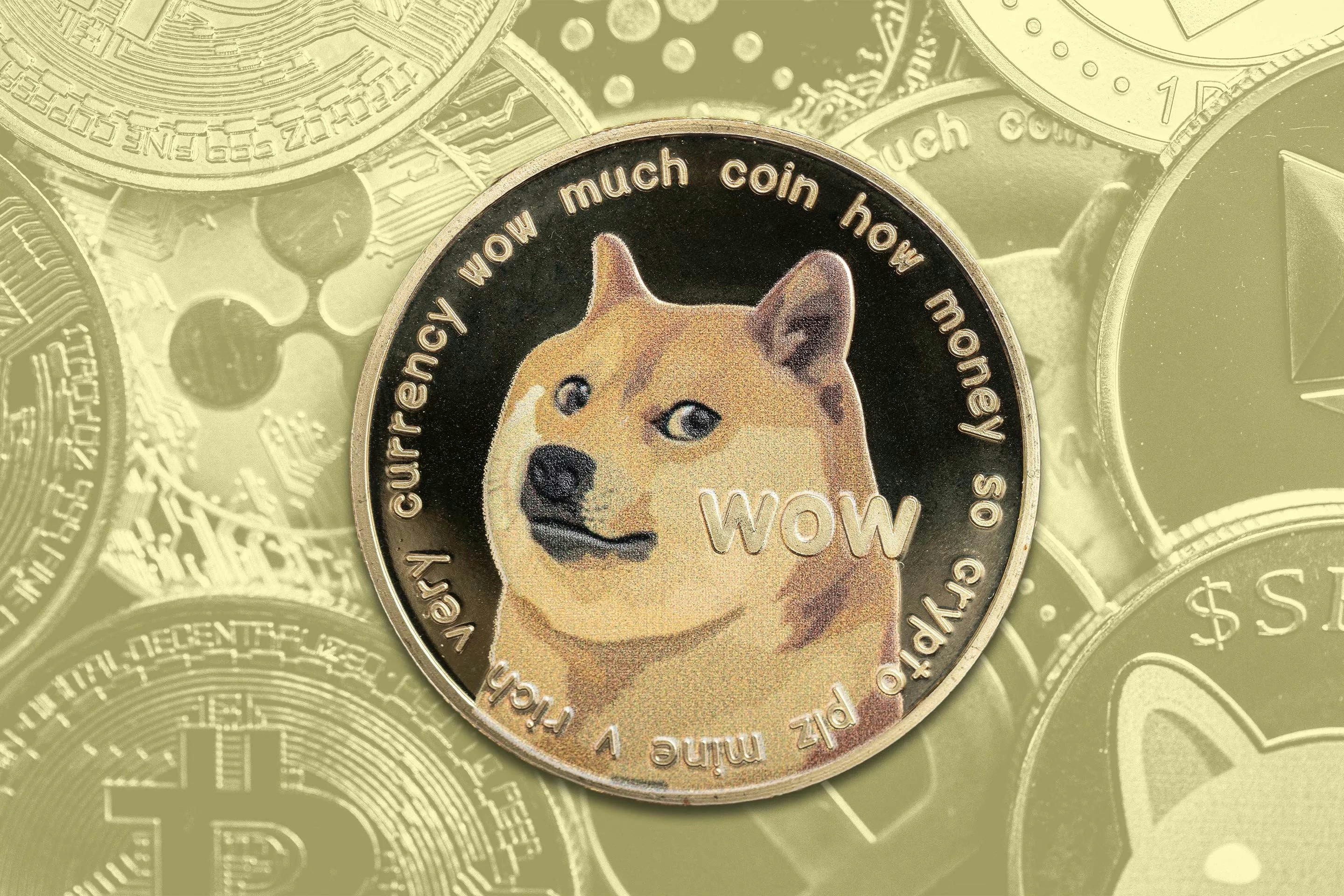
Cryptocurrencies have long been characterized by their inherent volatility, a factor that has historically deterred many institutional investors from entering the market. However, recent developments indicate a potential shift in this dynamic. Dogecoin (DOGE), once widely regarded as a mere meme coin, has emerged as a focal point in discussions about whether institutional capital can foster lasting stability in the crypto markets or if volatility remains an intrinsic characteristic of the sector.
Institutional Inflows and the Legitimization of DOGE
Dogecoin’s evolution from an internet joke to a recognized investment asset has accelerated notably in recent years. In 2024, Grayscale Investments incorporated DOGE into its diversified cryptocurrency fund, signaling a growing acceptance among institutional investors. This shift has been facilitated by increasing regulatory clarity. The U.S. Securities and Exchange Commission’s (SEC) classification of DOGE as a non-security, alongside the European Union’s Markets in Crypto-Assets (MiCA) framework, has paved the way for professional investors to engage more confidently with the asset. By 2025, DOGE was listed on over 120 exchanges, including major platforms such as Coinbase and Binance, significantly enhancing its liquidity and attracting substantial capital inflows.
These institutional investments have had tangible effects on DOGE’s market behavior. The coin’s 30-day average volatility index declined to 2.8% in 2024, a marked reduction from over 20% in 2022. Additionally, DOGE’s correlation with Bitcoin—a traditional market benchmark—fell to 0.65 from 0.96, indicating that DOGE is maturing and becoming less dependent on Bitcoin’s price fluctuations.
The Volatility Paradox: Stability Amid Sentiment-Driven Swings
Despite these positive trends, DOGE’s volatility remains a persistent challenge. While institutional inflows have moderated baseline price swings, sentiment-driven movements continue to dominate the market. For instance, in December 2024, DOGE experienced a 23% surge following social media activity by Elon Musk. Conversely, in early 2025, the coin suffered a 4.28% decline that mirrored Bitcoin’s downturn and was exacerbated by miner sell-offs, with 65 million DOGE tokens liquidated within 48 hours.
These episodes of sharp price corrections echo the volatility observed in 2021, underscoring that although institutional capital can mitigate some fluctuations, it cannot fully eliminate them. DOGE’s valuation remains closely tied to speculative narratives and broader market trends, reflecting the ongoing tension between emerging stability and entrenched volatility.
Sustainability of Institutional Adoption: Regulatory, Utility, and Technological Drivers
The sustainability of institutional support for DOGE depends on several critical factors. Regulatory clarity remains paramount. The SEC’s delayed approval of a DOGE exchange-traded fund (ETF), now anticipated in August 2025, highlights ongoing uncertainties. Nevertheless, legislative initiatives such as the U.S. Clarity Act, combined with evolving global regulatory frameworks, are gradually legitimizing cryptocurrencies and may attract further institutional capital.
Utility growth also plays a significant role. DOGE’s adoption as a payment method has expanded, with over 3,100 businesses—including prominent companies like Tesla and Twitch—accepting it by early 2025. Its low transaction fees, averaging $0.0021, and rapid confirmation times of approximately one minute enhance its appeal for everyday use, bolstering its practical value.
Technological advancements are equally important. Dogecoin Improvement Proposals (DIPs), which include initiatives to further reduce confirmation times and improve scalability, aim to address key concerns of institutional investors. These upgrades seek to enhance DOGE’s functionality and long-term viability as a transactional asset.
Risks and Competitive Pressures
Despite encouraging developments, significant risks persist. Regulatory delays, particularly the SEC’s cautious stance on ETFs, continue to create uncertainty that may deter institutional participation. Additionally, the concentration of DOGE ownership poses challenges; a single whale controls 27.7% of the total supply, and the number of mid-tier holders is increasing. Large-scale sell-offs by these holders could destabilize prices and undermine market confidence.
Competition within the crypto space is intensifying. Emerging meme coins such as Shiba Inu and Pepe, alongside the recent surge of XRP, are reshaping investment strategies and vying for capital. Furthermore, alternative platforms like ETHRANSACTION are offering stable income opportunities through cloud mining, providing investors with options less exposed to DOGE’s price volatility. This diversification reflects a broader strategic shift as market participants seek stability amid persistent uncertainty.
Outlook: The Prospects for Lasting Stability
Dogecoin’s trajectory illustrates both the potential and the limitations of institutional involvement in the cryptocurrency market. While inflows of institutional capital have contributed to reduced volatility and enhanced legitimacy, sentiment-driven dynamics and broader market forces continue to provoke significant price movements. As regulatory frameworks become clearer and utility expands, DOGE’s stability may improve. However, for the foreseeable future, volatility remains an inherent and defining feature of the crypto landscape.