
Trending
Ethereum Founder Buterin Supports Layer-2 Solutions Using Layer-1 Security
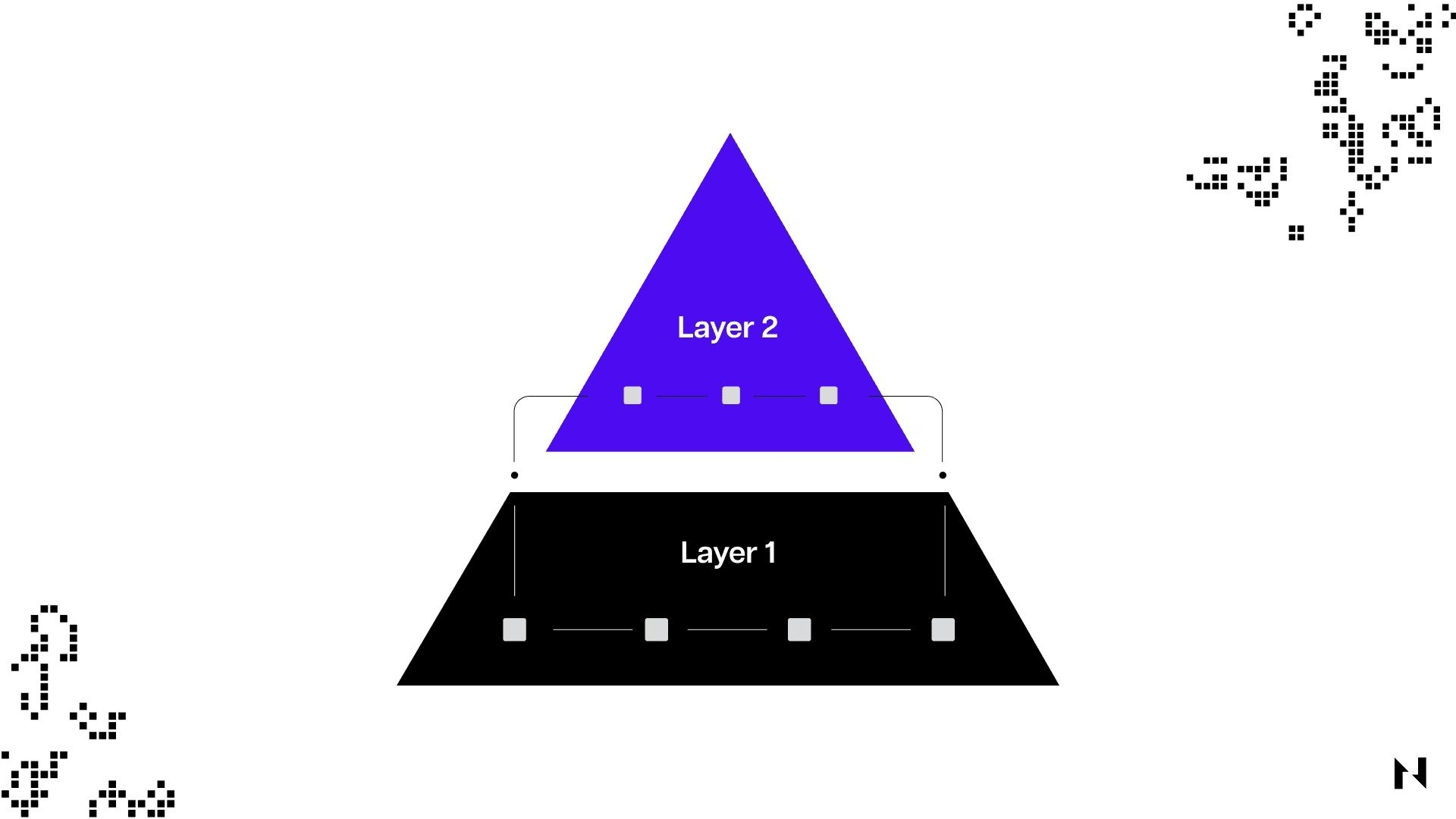
Ethereum Founder Vitalik Buterin Endorses Layer-2 Solutions Anchored in Layer-1 Security
Ethereum’s co-founder, Vitalik Buterin, has reaffirmed his strong support for Layer-2 (L2) blockchain solutions that build upon the security and foundational strengths of Layer-1 (L1) networks. In a recent statement on X, Buterin emphasized that the most effective L2 architectures are those that fully leverage the inherent capabilities of L1, including security, data availability, censorship resistance, and cryptographic proofs.
The Case for Layer-2 on Layer-1 Foundations
Buterin articulated that by depending on Ethereum’s robust L1 infrastructure, L2 projects can concentrate on transaction sequencing and validity verification, often employing advanced techniques such as zero-knowledge proofs or fraud proofs. This approach enhances overall efficiency and performance while eliminating the necessity for users to place trust in new validator sets. Crucially, if an L2 network encounters failure, users retain the ability to fall back on the underlying L1 blockchain, thereby preserving trust and security within the ecosystem.
Looking ahead, Buterin suggested that an increasing number of L1 blockchains might evolve into L2s operating on Ethereum, a concept once deemed unattainable. This transition aims to foster greater scalability, sustainability, and accessibility for both developers and users, aligning with Ethereum’s broader vision for the future of decentralized networks.
Challenges and Industry Dynamics
Buterin’s remarks arrive at a critical juncture for Ethereum, which continues to face challenges related to high transaction fees and network congestion. Layer-2 solutions are widely regarded as a viable remedy, offering the potential to offload transactions from the main chain, thereby alleviating congestion and reducing costs.
Nonetheless, the development of L2 solutions is not without obstacles. Buterin highlighted the ongoing challenge of balancing security, scalability, and decentralization—three pillars essential to the health of any blockchain network. Security remains paramount, as any breach could jeopardize the entire ecosystem. Scalability is necessary to accommodate increasing transaction volumes, while decentralization ensures that no single entity wields disproportionate control. Additionally, Buterin stressed the importance of interoperability among L2s, enabling seamless communication and asset transfers across different blockchains. He also underscored the need for user-friendly interfaces to facilitate broader adoption.
The market has responded with growing enthusiasm for L2 projects. For instance, Celo’s recent transition to an L2 model has led to a surge in daily active addresses, surpassing those of networks like Tron. Despite this momentum, skepticism persists regarding the long-term sustainability of L2 solutions, particularly concerning their ability to maintain security and scalability at scale.
Meanwhile, competitors are intensifying their efforts. Blockchains such as Binance Smart Chain (BSC) are accelerating their own L2 developments or enhancing L1 capabilities to challenge Ethereum’s dominance in decentralized finance (DeFi). Emerging data indicates that Ethereum’s future growth and potential market leadership may depend heavily on the success of its L2 strategies, even as rival networks continue to advance.
Buterin’s vision encapsulates the evolving priorities within the blockchain industry, where scalability, security, and user experience are increasingly critical. The integration of robust L2 solutions atop secure L1 foundations is poised to play a pivotal role in shaping the next phase of blockchain adoption and innovation.