
Trending
Meme Coins in 2025: Risks, Rewards, and Emerging Security Concerns
Meme Coins in 2025: Risks, Rewards, and Emerging Security Concerns
Meme coins, once regarded merely as internet novelties, have evolved into one of the most volatile and closely monitored segments of the cryptocurrency market by 2025. Although they accounted for only 2.5% of the total market value in 2024, data from CoinGecko and LunarCrush reveals that meme coins generated nearly a third of all crypto-related social media engagement earlier this year. This disproportionate influence underscores their significance despite a relatively modest market share.
The Proliferation and Volatility of Meme Coins
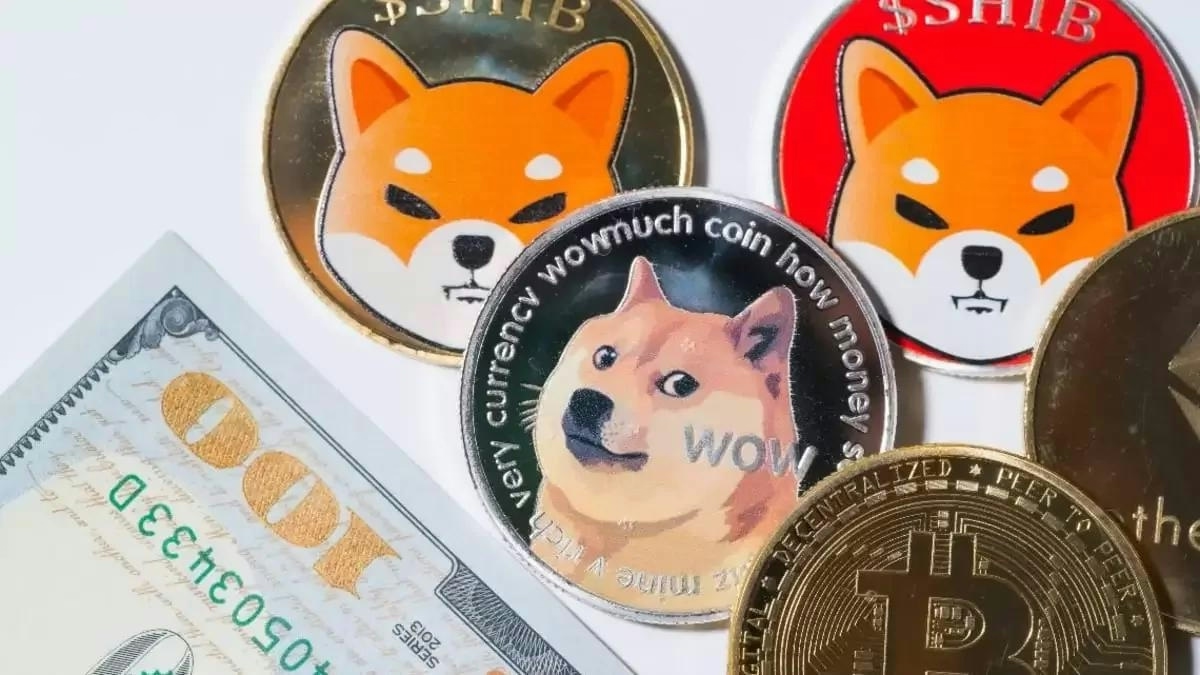
The launch of new meme tokens continues at an unrelenting pace, with thousands of new coins introduced daily. Many of these are created using recycled code or by anonymous developers, resulting in a landscape where a few tokens achieve viral popularity while the majority quickly disappear. Established meme coins such as Dogecoin and Shiba Inu have managed to maintain relative stability by cultivating loyal communities and expanding their practical applications. Their success has inspired newer projects to combine humor with tangible utility, incorporating features like staking and integration with payment applications.
Price volatility remains a defining characteristic of meme coins. Some experience rapid value surges, doubling within hours before precipitous declines days later. Others sustain their value through strong community support or enhanced functionalities. Increasingly, the narrative surrounding meme coins centers less on the tokens themselves and more on the motivations and cohesion of their holders.
Political Meme Coins and Market Manipulation
A notable development in 2025 is the emergence of political meme coins. One such token, associated with former President Donald Trump, reportedly generated nearly $100 million in trading fees over a two-week period, according to Arkham Intelligence and Lookonchain. While insiders reaped significant profits, tens of thousands of retail investors incurred losses. Political meme coins tend to surge during election cycles and major news events, driving unpredictable spikes in trading volume and volatility. Although some are launched with genuine ideological intentions, many serve as opportunistic vehicles for quick financial gain.
This trend has also attracted cybercriminal activity. Phishing schemes, counterfeit token clones, and wallet-draining scams have become increasingly prevalent. Hackers exploit the hype by distributing malicious airdrop links and browser extensions disguised as “wallet boosters” or “token claim” tools. Scam bots on platforms such as Telegram and Twitter promote fake liquidity pools capable of instantly draining connected wallets.
Security and Regulatory Challenges
The rapid expansion of meme coins has drawn heightened regulatory scrutiny. The recent inclusion of Coinbase in the S&P 500 highlights the growing integration of cryptocurrency into mainstream finance, a development likely to shape future regulatory approaches. As authorities intensify their oversight, meme coins face increased compliance risks and the possibility of regulatory crackdowns.
Security concerns are evolving in tandem with these regulatory pressures. Frameworks like MITRE’s AADAPT are being adopted to address vulnerabilities within digital financial systems, reflecting the urgent need for robust defenses against increasingly sophisticated cyber threats. Market responses to meme coins are now closely linked to broader cryptocurrency trends and investor sentiment, as evidenced by Bitcoin’s potential breakout and shifting perceptions of assets such as XRP. Established crypto firms are responding strategically, either by leveraging meme coin momentum or implementing safeguards to mitigate associated risks.
The Role of Community in Meme Coin Success
A defining feature of the most successful meme coins is the presence of strong, engaged communities. Projects like Bonk and Pepe have cultivated active followings that extend beyond mere speculation. These communities create memes, develop tools, organize events, and provide education for newcomers. They act as both value drivers and the first line of defense against scams, frequently alerting members to counterfeit tokens or fraudulent links. As meme coins continue to attract new investors, community-led education and vigilance remain essential.
In 2025, meme coins persist as a high-risk, high-reward domain shaped by ongoing innovation, speculative fervor, and an evolving landscape of security and regulatory challenges.