
Trending
Standard Chartered First Systemic Bank to Offer Spot Cryptocurrency Trading
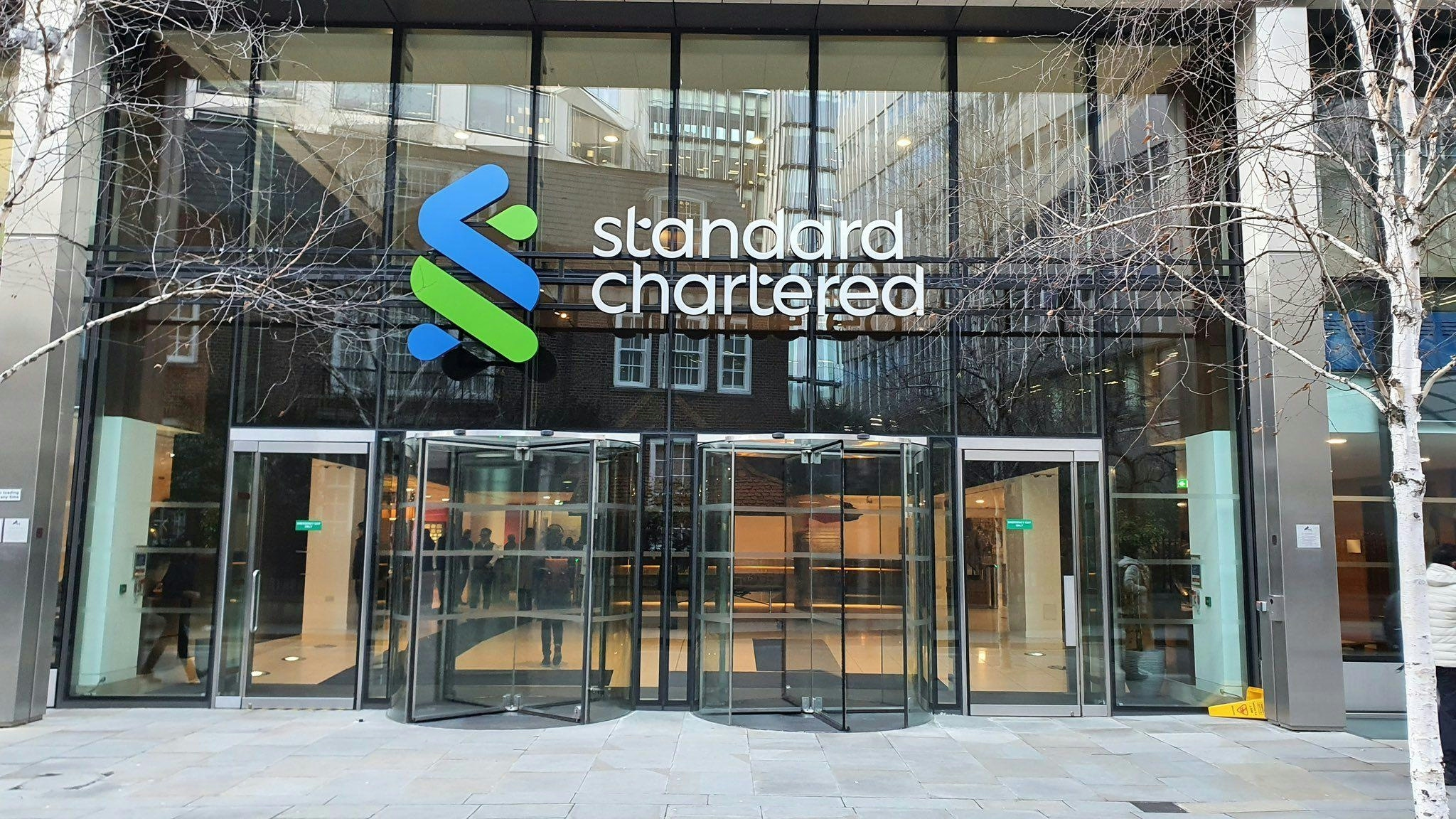
Standard Chartered Becomes First Systemic Bank to Offer Spot Cryptocurrency Trading
Standard Chartered has taken a pioneering step by launching spot trading services for Bitcoin and Ether, becoming the first global systemically important bank to provide direct cryptocurrency trading to institutional clients. This service targets corporates, investors, and asset managers, marking a significant advancement in the integration of digital assets into mainstream banking. Unlike most major banks, including Goldman Sachs, which have so far restricted their crypto offerings to derivatives, Standard Chartered’s move introduces direct spot trading to the institutional market.
The London-based bank announced that the new service will initially operate through its UK branch, with plans to expand soon to include non-deliverable forwards trading. By embedding spot cryptocurrency trading within its existing foreign exchange platforms, Standard Chartered allows institutional clients to access digital assets through familiar interfaces, with settlements directed to their preferred custodians. As a Financial Conduct Authority (FCA) registered cryptoasset service provider, the bank leverages its regulated framework to address common institutional concerns such as compliance and security, which have traditionally hindered broader adoption of cryptocurrencies.
Bill Winters, Group CEO of Standard Chartered, emphasized the strategic importance of digital assets, stating, “Digital assets are a foundational element of the evolution in financial services. They’re integral to enabling new pathways for innovation, greater inclusion, and growth across the industry.”
Expanding Digital Asset Capabilities Amid Regulatory Challenges
This expansion into spot trading builds on Standard Chartered’s established digital asset custody operations, which span multiple jurisdictions including Luxembourg. The bank also provides banking services to a variety of cryptocurrency firms and stablecoin issuers, collaborating with companies such as Paxos, FalconX, and StraitsX. Through its innovation arm, SC Ventures, Standard Chartered has launched several independent crypto-focused ventures, including Zodia Custody, Zodia Markets, and the tokenized fund platform Libeara. The bank also holds investments in institutional platforms like Europe’s SWIAT, which focuses on tokenized assets, and Singapore-based Partior, specializing in cross-border payments.
Despite these advancements, Standard Chartered faces considerable challenges. Heightened regulatory scrutiny remains a key concern, particularly as global regulators, including the Federal Reserve, emphasize stringent risk management standards for crypto-asset safekeeping. The inherent volatility of cryptocurrency markets and the complexities involved in integrating new technologies present additional risks as the bank broadens its digital asset services. Investor sentiment may be divided, with some viewing the initiative as a forward-looking innovation, while others may express caution over increased exposure to the unpredictable cryptocurrency landscape.
Competitors are expected to observe Standard Chartered’s progress closely, potentially adopting similar services or enhancing their own digital asset offerings to maintain competitiveness. As regulatory frameworks continue to evolve, the bank’s ability to navigate compliance and risk management will be crucial to the sustained success of its crypto trading platform.
With this launch, Standard Chartered solidifies its position as a leader in digital asset infrastructure among global banks, signaling a new phase in the institutional adoption of cryptocurrencies.