
Trending
US Banks Begin Offering Bitcoin Custody Services: Evaluating Self-Custody Options
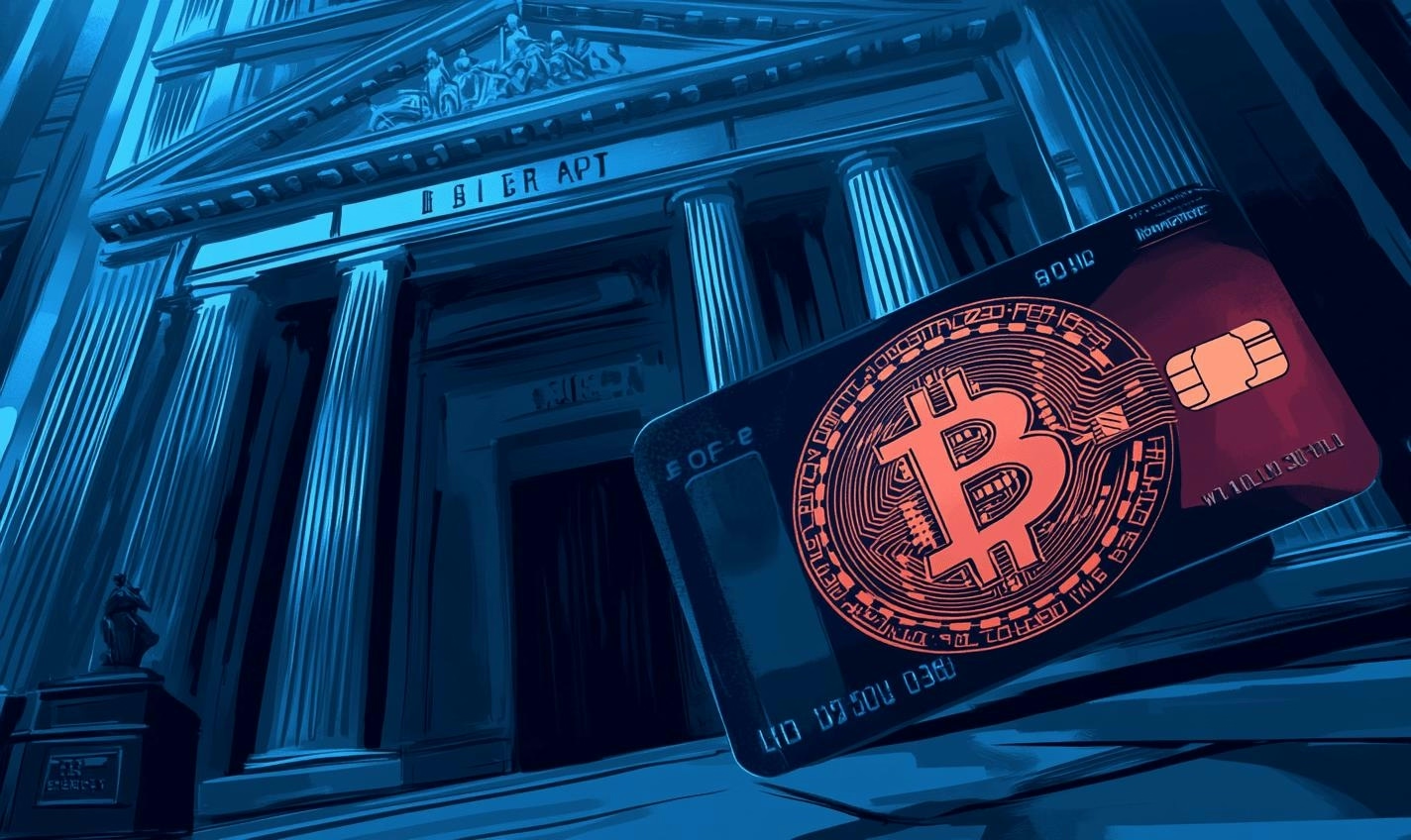
US Banks Begin Offering Bitcoin Custody Services
US banking regulators have jointly authorized banks to provide safekeeping services for cryptocurrencies such as Bitcoin, marking a pivotal development in the integration of digital assets within the traditional financial system. This directive, issued by the Office of the Comptroller of the Currency (OCC), the Federal Reserve Board, and the Federal Deposit Insurance Corporation (FDIC), sets forth regulatory expectations and risk management standards that banks must adhere to when managing crypto assets.
A primary emphasis of the guidance is the management of cryptographic keys—the digital credentials essential for accessing cryptocurrency holdings. Regulators have underscored that the loss or compromise of these keys can lead to significant financial damage, with banks potentially held liable for such incidents. Consequently, institutions are mandated to implement rigorous security protocols for key generation, storage, and recovery, alongside comprehensive contingency plans to address potential breaches.
Banks venturing into the crypto custody arena confront multiple challenges, including intensified regulatory oversight, evolving cybersecurity threats, and the necessity for advanced technological infrastructure. Compliance with stringent anti-money laundering (AML) and counter-financing of terrorism (CFT) regulations is also required, involving thorough customer identity verification and vigilant transaction monitoring to detect suspicious activities.
The introduction of Bitcoin custody services by US banks is anticipated to stimulate greater investor confidence in secure digital asset storage. This development may prompt competitors to enhance their custodial offerings or innovate new self-custody solutions to distinguish themselves in a rapidly evolving market.
Evaluating Self-Custody Options Amid Growing Crypto Ownership
As global cryptocurrency ownership expands, the demand for secure storage solutions continues to rise. A recent report by crypto exchange Gemini highlights increasing ownership rates in regions such as Singapore, where 28% of respondents reported holding crypto assets, and the United Kingdom, which experienced a rise from 18% in 2024 to 24% in 2025. While banks and exchanges offer convenient custodial services, a significant number of crypto holders are gravitating towards self-custody wallets to maintain greater control and security over their assets.
The development of user-friendly self-custody solutions, exemplified by providers like Wallet of Satoshi and insights from Tangem on crypto security, underscores the importance of empowering users to manage their private keys independently. These wallets enable individuals to retain full ownership of their cryptographic keys, thereby reducing reliance on third parties and mitigating risks associated with lost or stolen credentials. However, self-custody also entails considerable responsibility, including the secure storage of seed phrases and vigilance against common errors that could result in irreversible asset loss.
As US banks commence offering Bitcoin custody services, the ongoing debate between custodial and self-custodial approaches is expected to intensify. Each option presents distinct advantages and risks, highlighting the critical need for robust security measures and informed decision-making as digital assets become increasingly integrated into mainstream finance.